Mostrando entradas con la etiqueta New Zealand. Mostrar todas las entradas

domingo, noviembre 18, 2007

CLIMATE CHANGE: IPCC report reinforces need for climate change action


The latest report from the UN’s climate change panel reiterates the need for concerted and urgent action to reduce greenhouse gas emissions, Climate Change Minister David Parker says.

Fresh from sharing this year’s Nobel Peace Prize with former US vice-president Al Gore, the Intergovernmental Panel on Climate Change (IPCC) has released its fourth and final 2007 report on global climate change.

David Parker welcomed the release of the global Synthesis Report in Valencia, Spain, which underlines findings released earlier this year and supports calls for urgent action.

The Minister said the information the IPCC produced made a clear case that governments can act and must act to avert dangerous climate change.

“It confirms the increasing pace of climate change, and the serious impacts we and the rest of the globe may face if we do not get greenhouse gas emissions under control.”

The report reiterates that with technologies that are available and affordable today, or that are currently being developed, New Zealand along with the rest of the world can cut emissions and avoid the worst of the projected impacts of climate change.

“In addition, a number of actions stand to deliver additional economic, environmental and health benefits. It confirms that it’s cheaper to take action on climate change than not. Even at the household level, simple steps can cut vehicle fuel and energy bills significantly, and improve people’s health while cutting emissions,” David Parker said.

In September the Government announced a policy package to tackle climate change – including an emissions trading scheme –that encompasses many of the measures the IPCC list as being effective and affordable. These include measures to put a price on carbon, increase the uptake of energy efficiency measures, develop more renewable energy and expand the use of biofuels.

“This Synthesis Report integrates and presents in a useful and readable way the enormous amounts of scientific information contained in the three volumes of the underlying reports, and allows us to see even more clearly the connections between our actions and the health of the planet.

“We all have a very real opportunity to take effective action on climate change and leave ourselves better off today, and in the long run,” David Parker concluded.

  • The IPCC’s first report in February confirmed that climate change is happening and that it is very likely human activity is responsible for much of it in recent times.
  • The second report in April painted a clear picture of climate change impacts that the world, including New Zealand, is already experiencing and those that it is very likely we will face from now on.
  • The third report spelt out that practical and cost effective measures to reduce emissions are available.
Via: Scoop


Found this post useful? Consider subscribing to
.

jueves, septiembre 27, 2007

NEW ZEALAND: Opening of Meridian’s Project West Wind

Thursday 27 September 2007


It's great to be here to turn the first sod of this project and see for myself the site chosen. Indeed when visiting a wind farm site, it generally is very apparent why it was chosen.

Makara will have the first wind farm in the Wellington area. At between 140 and 150 megawatts, it will make a substantial contribution to our energy supply, producing enough power to supply Wellington City when the wind is blowing.

I opened another of Meridian’s wind farms, White Hill in Southland, in June. At the time,
New Zealand was generating 170 megawatts of electricity from wind farms. A few months later, our generation capacity is almost double, at 320 megawatts. With West Wind, our wind generation capacity will significantly increase again.

I am told that
Meridian expects West Wind to be one of the most productive wind farms in the world. The strong and consistent winds mean Project West Wind will be generating electricity over 90 per cent of the time, and generating at full capacity almost half of the time.

That’s impressive, as I understand that the average wind farm only operates at full capacity 23 per cent of the time. Overseas wind farm operators will look at West Wind with envy.

Good
renewable energy resources are often located far away from where the demand for them is. West Wind is different. It is on the doorstep of a major city. There will be few cities in the world, let alone capital cities, which can generate renewable electricity from within their boundaries.

During the RMA consenting stage, West Wind attracted a great deal of attention. Well over 4000 submissions were received, of which over 3000 supported the project.

The
Wellington City Council and Greater Wellington did a commendable job in processing the application and making a timely decision. I am sure they were relieved that the Environment Court confirmed the councils’ original decisions. Wind farms are assuming greater importance in our energy mix as New Zealand and the rest of the world look for ways to meet the challenges posed by climate change.

Last week, I announced a significant part of the Labour-led Government’s plan to fight climate change.

We believe that an emissions trading scheme, which puts a price on emissions, creates the right incentives across the economy to use fuel and energy more efficiently, and to think about how we use resources and manage our land.

Stationary energy, which includes electricity generation, will join the scheme in 2010.

The government’s emission trading scheme has been very well received. I believe New Zealanders are ready to take responsibility for reducing greenhouse gas emissions.

Meridian’s recent carbon credit auctions demonstrate the public’s interest and willingness to take action.

The Government has also agreed on specific medium and long-term objectives and targets to move New Zealand towards greater sustainability.

- By 2025 our target is to have ninety per cent of electricity generated from renewable sources.

- By 2040 our target is to reduce by half per capita emissions from transport.

- We aim to be one of the first countries to introduce electric vehicles widely, and;

- By 2020 we aim to achieve a net increase in forest area of 250,000 hectares.

Achieving those targets will move us significantly towards our vision of New Zealand becoming carbon neutral.

With this programme our electricity sector could reasonably be seen as carbon neutral by 2025, the rest of our stationary energy sector by 2030, and our transport sector by 2040.

I want to talk more about two of these targets.
The renewable energy target is affordable and achievable. With our plentiful renewable energy resources, it is easier for New Zealand to commit to a low emissions electricity system than almost any country.

We do need a high rate of investment in new renewable generation from our abundant renewable resources.

Projects such as West Wind and investment in renewable generation from companies like Meridian Energy will be critical in meeting our target. The
emissions trading scheme will encourage more renewable electricity by favouring low emissions generation over fossil fuelled generation.

Further initiatives will be announced in the coming weeks.

The second target I want to talk about is that objective to be the first country to widely deploy electric vehicles.

With our high renewable energy use, electric vehicles make good environmental and economic sense. We could become world leaders in producing sustainable transport energy.

It is very encouraging that Meridian shares our vision. Last month, Meridian announced that it will run a trial of electric vehicles next year.

I commend Meridian on its leadership in this area. It makes sense for the company, as a renewable generator with a commitment to becoming carbon neutral, to trial electric vehicles.

The government will be watching this trial with great interest. As I remarked in my Prime Minister’s statement to Parliament early this year, New Zealand’s future is dependent on long-term sustainable strategies for our economy, society, environment, and culture.

These strategies have to be driven by strong leadership and sound policies.
Two more important sustainability strategies will be released next month : the
New Zealand Energy Strategy and the New Zealand Energy Efficiency and Conservation Strategy. They set out the government’s vision for a sustainable energy system and the initiatives we will be undertaking to achieve it.

These initiatives will complement the emissions trading scheme.

The Minister of Energy, David Parker has already welcomed the input from thousands of businesses, groups, and individuals on New Zealand's energy and climate change future.

We’re very grateful to all those who took the time to make submissions, and give us the benefit of their considered views on the wide range of issues covered by the draft strategies and the companion documents.

The next few years in the energy industry will be both challenging and exciting, and we look forward to working with key stakeholders as we develop a more sustainable nation.

This new wind farm, once operational, is an important step along the way. It gives me great pleasure to be here as construction gets underway.


Rt Hon Helen Clark
Prime Minister

Via|
Scoop
,,,,,,,,,


Found this post useful? Consider subscribing to
.


domingo, septiembre 23, 2007

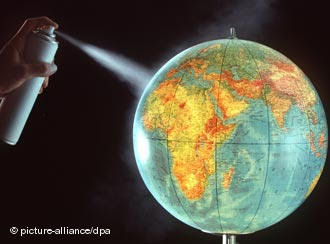
CLIMATE CHANGE: interview with Thomas Bunge, Recalling the World's First Steps Toward Climate Protection

The passage of the Montreal ozone protocol 20 years ago was a milestone in international climate protection. DW-WORLD.DE spoke to Thomas Bunge, a member of the German delegation, who was part of the historic event.

Thomas Bunge represented Germany's Federal Environment Agency in drawing up the "Montreal Protocol on Substances that Deplete the Ozone Layer" in September 1987. The lawyer is currently responsible for Environment and Spatial Planning at the agency.

DW-WORLD.DE: Why was the 1987 Montreal protocol so significant?

Thomas Bunge: That was the beginning of international regulations to protect the earth's atmosphere. Until then, there was only regulation of long-range, transnational air pollution. People tried for the first time to resolve a worldwide problem through international law, although in retrospect, the regulations then were certainly inadequate.

Can you briefly explain why they were inadequate?

The regulations agreed in 1987 were supposed to reduce the production and use of substances that damaged the ozone layer by a maximum of only up to 50 percent. But people very quickly noticed that that wasn't enough to effectively protect the ozone layer. In 1990, that is, a year after the regulations came into effect, the stipulations had already been tightened. The decision was made to entirely discontinue production and use by the year 2000. In 1994, the deadlines were again shortened. Thus people wanted, and still want, to relatively quickly achieve a full discontinuation of production, and also of use, of the substances. It's true that developing countries currently the still have the right to produce and use the substances in small amounts. But relatively soon the use and the production will be discontinued worldwide.

Can you describe how things came about? How is such a compromise reached?

As is normally the case in the realm of international law, there are specific working groups for the individual application areas one aims to regulate. The building blocks for such an international treaty are worked out in the groups. The individual building blocks must then be voted on and approved in the plenum. That is, as in all cases, a compromise between the interests that the individual states represent at these conferences, of course. The whole thing was fleshed out with science and the scientific results available up until the signing in 1987 were included. The interests of the individual states and the scientific results were then put in relation. That led to a compromise with which one was at the time not particularly happy.

Can you provide an example of a practical problem that had to be overcome? Did particular countries block movement?

It was several blocks of states. The European Union comprised its own negotiation block. Of course, that was significantly fewer states than today. There was a so-called "Toronto Group" of states. They represented the Scandinavian states, Canada, Australia and Switzerland. This group with Australia and New Zealand, which would have been affected the soonest by the consequences of the hole in the ozone layer -- and then was affected -- wanted to pass very wide-reaching regulations. On the other side, there was an array of industrial countries that produced these substances. They were naturally interested in continuing production or being able to produce appropriate substitutes.

How was the atmosphere among the conference participants on Sept. 16, 1987, when the protocol was passed?

People were pleased that a compromise had been reached. But we had already seen that the rules weren't sufficient for the next 20, 30, 40 years. We recognized that the progressive states also had had to swallow some bitter pills. But in retrospect, it was a success, of course, to very quickly bring very many countries on board on trade regulations that envisaged limitations on trade with countries that weren't party to the treaty. In this way, one had a model for the negotiations on climate regulations that started relatively soon thereafter.


Found this post useful? Consider subscribing to

.


Label Cloud

The Energy Blog