Mostrando entradas con la etiqueta global warming. Mostrar todas las entradas

miércoles, mayo 07, 2008

ENERGY CRISIS: Food shortages and incredible arguments

I find this talk of genetically modified food being necessary to feed the world's population incredible ('As the world begins to starve it's time to take GM seriously', Comment, last week). Yes, it would get us out of a scrape in the short term, but we have to realise that we cannot carry on expanding the population and consuming resources without consequences. If the population continues to grow, we will reach a situation where even GM cannot feed everyone, never mind competing for space, water, a clean environment and the chance for other species to exist. Overpopulation is the biggest single cause of our environmental woes and we cannot make significant improvements without addressing this.
Ryan Taylor, London SW9

Crop yields need to increase by 1.6 per cent per year (compounded) to avoid mass starvation. From the mid-Sixties to the mid-Nineties, soybean, canola, maize, wheat and rice did just that, but in the last 10 to 15 years, wheat and rice have fallen badly below this threshold.

The difference? Wheat and rice are not yet 'biotech' crops whereas breeding tools have been successfully applied to the others. Robin McKie's timely article highlights that this important new breeding tool is not only safe and effective but also desperately needed.

We simply cannot afford to throw GM out if we are to double crop production in the next 40 years in a sustainable fashion. Ironically, pressure from some NGOs has engendered overly restrictive regulations that price out GM breakthroughs from small companies and publicly funded research institutes. Such breakthroughs could make major contributions to enhancing yield.
Professor Chris Lamb, John Innes Centre, Norwich

Your article trots out the old line that GM crops can give the world higher-yielding crops using fewer pesticides. On what evidence? A report last week from the United Nations World Food Programme said GM was not a quick fix to feed the world's poor. The authors saw little role for it in feeding the poor.
Roger Mainwood, Wivenhoe, Essex

Robin McKie addresses the criticism of the biotechnology industry, based on assumptions that it is driven by 'international conglomerates', which is not always the case.

For Hawaiian farmers whose papaya crop was ravaged by the ringspot virus in the Nineties, GM technology was a saving grace. Not through big business, but scientists at Cornell University who used GM technology to create a crop resistant to ringspot virus that saved the Hawaiian papaya industry from collapse. One would hope that if a similar event were to occur on our shores, environmental campaigners would support British farmers' access to such beneficial technology.
Julian Little , chair, Agricultural Biotechnology Council, London WC1

Robin McKie presents a stimulating but flawed solution to feeding a rising population at a time of climate change. According to the Intergovernmental Panel on Climate Change's fourth assessment report: 'Globally, the potential for food production is projected to increase with increases in local average temperature over a range of 1 to 3 degrees C, but above this it is projected to decrease', so it is possible that global food production may actually increase, making the case for GM hardly compelling.

We should beware the siren calls from GM conglomerates.
Mike Frost, Bristol

Julius Nyerere once said: 'When people go hungry, it is not food that is short, but justice.' Until that is corrected, no amount of new technologies will be enough.
Frank Jackson, Harlow, Essex

Source:
The Observer

Found this post useful? Consider subscribing to
.

sábado, marzo 15, 2008

JAPAN: Tony Blair Urges `Revolutionary' Carbon Emission Cuts


Former U.K. Prime Minister Tony Blair urged the U.S., Japan and European nations to make ``revolutionary'' cuts to greenhouse gases responsible for global warming.

``Since poorer nations will see their emissions rise as they industrialize, and since the world population may well grow from 6 to 9 billion, emissions in the richer nations will have to fall close to zero,'' Blair said at energy and environmental talks in Chiba City near Tokyo.

Ministers of the Group of Eight industrialized nations and representatives from 12 other countries discussed how to finance technological efforts to tackle climate change, and the basis for a successor to the Kyoto Protocol that expires in 2012.

U.S. emissions of greenhouse gases total 20 tons a year per person, twice as much as in Europe and Japan, Blair said. The world's average emission level may need to fall to as low as 2 tons per person to halve global output of the harmful gases by 2050, he said.

``If the average person in the U.S. is to emit, per capita, one-10th of what they do today and those in the U.K. or Japan by one-fifth, we're not talking adjustment, we're talking about a revolution,'' Blair said.

Green Technology

Japan will propose developing 21 emission-fighting technologies by 2030 at the three-day meeting, dubbed the ``G-8 Gleneagles Dialogue on Climate Change, Clean Energy and Sustainable Development.''

The technologies include coal- and gas-fired power plants that emit almost no carbon dioxide, steelmaking processes using hydrogen, and a system to store carbon underground.

The conference serves as a prelude to another climate change summit this July, on Japan's northern island of Hokkaido.

The Kyoto Protocol requires 37 nations to cut emissions by a combined 5.2 percent from 1990 levels by 2012. The accord was never designed to solve global warming, and a new treaty must set targets to restrict temperature gains, Robert Watson, former chairman of the United Nations Intergovernmental Panel on Climate Change, said March 11 at the Oceanology International conference in London.

The 1997 treaty limiting emissions for developed countries expires in 2012. The U.S. never ratified the accord. A new treaty is expected to be signed in Copenhagen next year.

Global Fund

The U.S., the largest emitter of greenhouse gases among industrialized nations, will seek to increase a proposed $10 billion clean technology fund, Daniel Price, an international economic affairs adviser to President George W. Bush, said yesterday.

The size of the fund, to be raised by the U.S., U.K., Japan and the World Bank, ``is insufficient to address the cost of the challenge,'' Price said. ``We are focused now on expanding the universe of donors for this fund.''

Price attended a meeting on energy security and climate change in Chiba before the G-20 ministerial talks.

China, the world's second-biggest emitter of carbon dioxide, said on March 5 developed nations should provide financial support of 0.5 percent of their annual gross domestic product to help it and other developing nations remedy the effects of climate change.

China's Plea
The Chinese proposal was among 26 submissions published on the Web site of the United Nations Framework Convention on Climate Change, which aims to craft a successor agreement to the Kyoto Protocol.

``The incentives will be there to make environmental technology a massive new industrial opportunity, equivalent to the Industrial Revolution of the 19th Century,'' Blair said. ``The call to action is loud and clear.''


Source: Bloomberg| by Shigeru Sato & Yuji Okada


Found this post useful? Consider subscribing to
.

domingo, febrero 24, 2008

NEW TECHNOLOGY: Ricardo Inc., Develops Next-Generation Wind Energy

Massachusetts-based wind energy company General Compression and its compressor technology partner Mechanology are using Ricardo's automotive engineering and development expertise to develop technology which aims to make wind power as reliable as conventional power.

With energy security and global warming at the very top of the political agenda in all parts of the world, renewable energy resources are increasingly seen as an important contributor to the future of regional and national grid power supplies. Of the potentially large-scale renewable energy resources wind is perhaps the most universally available, as virtually every part of the earth's surface experiences the natural force of the wind.

However, as the wind is subject to the vagaries of the weather and as such is inherently unpredictable, wind energy has traditionally been seen as an intermittent source of electrical power. General Compression's proprietary Dispatchable Wind system carries the descriptive tagline 'wind energy on demand' because it decouples wind energy capture from electrical power generation by substituting the electric generators in its wind turbines with advanced compressor systems linked to a central high pressure compressed air reservoir at each wind farm.

The reservoir acts as an energy buffer, storing compressed air which can be passed through an expander plant in order to generate electricity whenever it's needed - not just when the wind is blowing.

Dispatchable Wind is based on the use of the innovative, high energy density Dragonfly compressor under development by Mechanology, Inc. Ricardo has been chosen by Mechanology to be one of its key product development partners to assist in developing the Dragonfly such that it will meet or exceed the rigours of round-the-clock operation with an expected life in excess of 20 years.

Ricardo is applying its well-proven product engineering skills and practices in areas such as design optimization and material selection, performance modelling and analysis, mechanical dynamic analysis, reliability and robustness engineering, design for manufacture and cost optimization.

"Increasing energy efficiency has been a prime focus at Ricardo for many years," said Ricardo Inc. President Dean Harlow.

"Our deep engineering experience places us in an ideal position to assist in the development of the high energy density Dragonfly compressor. General Compression's goal of making wind power available on-demand with its Dispatchable Wind system signals a major advancement in the practical application of this important renewable energy source.

"For Ricardo, it is yet another opportunity to apply our advanced engineering skills and technology to address global energy issues in a range of rapidly developing industrial sectors."

Ricardo, the Eco-Innovation Technology Company, is a leading independent provider of technology, product innovation, engineering solutions and strategic consulting to the world's automotive, transport and new energy industries. The company's skill base represents the state-of-the-art in low emissions and fuel-efficient powertrain technology, and can be best summarized: "Ricardo is Fuel Economy."


Source: SPX|by Van Buren Twp
Found this post useful? Consider subscribing to
.

sábado, febrero 09, 2008

WESTERN HEMISPHERE: Converting land for biofuel worsens global warming

Clearing raw land to produce biofuels actually contributes to global warming by emitting large amounts of greenhouse gases into the atmosphere, researchers warned Thursday.

Carbon dioxide (CO2) emissions from new croplands carved into rainforests, savannas, wetlands or grasslands would easily surpass the overall amount of CO2 emissions reduced through the use of biofuels, according to a report in the February 8 edition of Science.

"If you're trying to mitigate global warming, it simply does not make sense to convert land for biofuels production," said Joe Fargione, a founder of private environment protection agency the Nature Conservancy and co-author of the study.

"All the biofuels we use now cause habitat destruction, either directly or indirectly," he said.

"Global agriculture is already producing food for six billion people. Producing food-based biofuel, too, will require that still more land be converted to agriculture."

Converting land to grow corn, sugar cane or soy beans -- crops used in the production of biofuels -- creates a "biofuel carbon debt" by releasing 17 to 420 times as much CO2 into the atmosphere as the greenhouse gas reductions which the biofuels provide by displacing fossil fuels.

Carbon is stored in dead trees and plants as well as in the soil, and naturally seeps into the atmosphere in the form of CO2. Converting native habitats to cropland increases the release of CO2 into the air, the report said.

It would take years, and in some cases centuries, before biofuels derived from crops on converted land would lead to a net reduction of greenhouse gases, according to the report.

The researchers calculated that in Indonesia, where wetlands are being converted to grow palm oil to produce biofuels, it will take 423 years before biofuel CO2 emmission savings would repay the carbon debt caused by the land conversion.

"We don't have proper incentives in place because landowners are rewarded for producing palm oil and other products but not rewarded for carbon management," said report co-author Stephen Polasky, an applied economics professor at University of Minnesota.

"This creates incentives for excessive land clearing and can result in large increases in carbon emissions."

An incentive for carbon sequestration or a penalty for carbon emmissions is needed in order to slow CO2 emissions and environmental destruction, Polasky said.

The researchers noted that strong growth in the demand for corn-based ethanol in the United States has led to the increasing destruction of the Amazon rainforest in Brazil.

To address the ethanol demand, US farmers have stopped rotating corn crops with soy, leaving their Brazilian counterparts to produce more soybeans to meet rising global demand, resulting in further Amazon deforestation, they said.

The report stresses that certain biofuels do not contribute to global warming because they leave the natural ecosystem intact, and that obtaining biofuels from biomass waste or forestry products such as wood chips causes less harm to the environment and is the aim of several scientists.


Source: Agence France Presse

Found this post useful? Consider subscribing to
.

lunes, febrero 04, 2008

CLIMATE CHANGE: It is fears boost profit at India's Suzlon Energy

Indian wind power firm Suzlon Energy posted a 92 percent jump in third-quarter net profit Tuesday as it won more orders amid worldwide concern about climate change. The Pune, western India-based company, the world's fifth-largest wind energy firm, said net profit rose to 3.38 billion rupees (86 million dollars) in the three months ended December 31, from 1.76 billion rupees a year earlier.

The standalone profit, excluding the company's subsidiaries, was notched up on sales of 16.55 billion rupees during the quarter, an increase from 11.06 billion rupees a year earlier, it said in a statement.

"Worldwide concern on the issue of climate change continues to be a key driver for growth," chairman and managing director Tulsi Tanti said. "Markets such as the United States have continued their aggressive growth."

Tanti has capitalized on rising international concern over global warming and climate change caused by the burning of fossil fuels to expand his company rapidly.

Suzlon Energy had orders worth 171 billion rupees as of January 25, 2008 and the global outlook is strong, Tanti said.

"With initiatives like the European Commission's target for 20 percent of Europe's energy being produced from renewable sources by 2020, wind is poised to gain further growth," he said.

Suzlon last year won control of the German turbine maker REpower. It has expanded into China, the United States, Belgium, Denmark, Australia and Germany.

Suzlon Energy shares climbed 26.25 rupees, or 8.34 percent, to 341.15 rupees on the Bombay Stock Exchange. The broader Indian stock market fell 60.84 points, or 0.34 percent, to 18,091.94.

Source: Agence France Presse

Found this post useful? Consider subscribing to
.

lunes, diciembre 03, 2007

CLIMATE CHANGE: United Nations Kicks Off Global Warming Conference to Build New Climate Agreement

Faced with melting polar ice caps and worsening droughts, climate experts at a massive United Nations conference Monday urged quick action toward a new international pact stemming an increasingly destructive rise in world temperatures.

A key goal of the two-week conference, which opened with delegates from nearly 190 countries in attendance, will be to draw a skeptical United States into an agreement to cut emissions of carbon dioxide and other so-called greenhouse gases.

While the U.S. delegation declared it would not be a "roadblock" to a new agreement, Washington remains opposed to steps many other countries support, such as mandatory emissions cuts by rich nations and a target for limiting the rise in global temperatures.

The American position suffered a blow Monday when the new Australian prime minister signed papers to ratify the Kyoto Protocol climate pact. The move leaves the U.S. the world's top emitter of greenhouse gases as the sole industrial power not to have joined.

Conference leaders urged delegates to move quickly to combat climate change.

"The eyes of the world are upon you. There is a huge responsibility for Bali to deliver," said Yvo de Boer, the executive secretary of the conference. "The world now expects a quantum leap forward."

The conference kicked off amid growing global momentum for dramatic action to stop rising temperatures that scientists say could lead to swamping of coastal areas and islands by higher oceans, the wiping out of species, economic havoc and a spike in natural disasters such as storms, fires and droughts.

The Bali meeting will be the first major conference of its kind since former Vice President Al Gore due to arrive next week and a
United Nations scientific council won the Nobel Peace Prize in October for their environmental work.

The immediate aim will be to launch negotiations toward a pact to replace the Kyoto Protocol when it expires in 2012, and set an agenda for the talks and a deadline. The
United Nations says such an agreement should be concluded by 2009 in order to have a system in place in time.

Among the most contentious issues ahead will be whether emission cuts should be mandatory or voluntary. Also to be tackled will be to what extent up-and-coming economies like China and India will have to rein in their skyrocketing emissions, and how to help the world's poorest countries adapt to a worsening climate. The American delegation was clearly on the defensive in Bali, presenting a statement detailing the ways the U.S. is fighting global warming without submitting to mandatory emissions targets.

"We're not here to be a roadblock," insisted Harlan L. Watson, the senior U.S. climate negotiator. "We're committed to a successful conclusion, and we're going to work very constructively to make that happen."

Confronted with the scientific reports of the past year, the Bush administration has signaled a willingness to play a larger role in the negotiations, and U.N. officials agree they must craft a post-Kyoto framework that Washington will go along with. Australia abandoned the anti-Kyoto alliance with the U.S. on Monday, when new Prime Minister Kevin Rudd signed the paperwork to ratify the pact. Delegates in Bali erupted in applause when Australia's delegate, Howard Bamsey, told the plenary that Canberra was jumping on board. Environmentalists at the conference cited what they saw as growing international momentum for tougher safeguards against global warming.

Even critics of the Bush administration pointed out that many individual states, such as California, were on the forefront of cutting emissions.
"Despite the failure of the current president to take serious action on global warming, the political landscape in the United States is shifting dramatically in favor of mandatory limits on global warming pollution," said Alden Meyer of the Union of Concerned Scientists, citing upcoming action in the U.S. Congress. Trying to fend off charges that America is not doing enough, Bush said last week a final Energy Department report showed U.S. emissions of carbon dioxide, a leading greenhouse gas, declined by 1.5 percent last year while the economy grew.


Via: Associated Press|JOSEPH COLEMAN
Found this post useful? Consider subscribing to
.


sábado, octubre 06, 2007

CLIMATE CHANGE: Gore discusses global warming in Mexico

Global warming isn't a popular topic in Mexican political circles, but Al Gore traveled to Mexico on Thursday night for the second time in two months because he has found a receptive audience in President Felipe Calderón.

Calderón wants Mexico to be a leader in confronting climate change, not just in Latin America but across the planet.

“Your president is saying and doing some important things,” Gore told nearly 5,000 people at a lecture hosted by Puebla's Benemerita University. “I have met with him. I have also met with opposition leaders, and I sense a growing political will here in Mexico.”

The former U.S. vice president, who will be in Tijuana this morning to present his global-warming program at the Autonomous University of Baja California, arrived at the Puebla auditorium in a caravan of environmentally friendly Honda hybrids.

Once onstage, Gore paced back and forth for 90 minutes, outlining his argument in a dry, professorial manner. He seemed at ease as he crusaded for the cause that some say has made him a contender for the Nobel Peace Prize, which will be announced Friday.

“We have a lot at stake, your country and mine,” he said.

Mexico made its mark on the study of climate change when Mexican scientist Mario Molina was awarded the 1995 Nobel Prize in chemistry for discovering how compounds used in refrigerants and aerosol sprays affect the depletion of the ozone layer.

Molina, a University of California San Diego professor of chemistry and biochemistry, has been a Gore adviser for more than 20 years. Now, Molina is also advising Calderón, who has set environmental protection as a priority of his administration.

Calderón met with Gore in July after seeing his Academy Award-winning documentary, “An Inconvenient Truth.” During that meeting at Mexico's White House, Gore told Calderón that Mexico “plays a pivotal role” in the world effort to control global warming.

“Mexico is a developing country that is handling this issue like a developed nation,” Environment Minister Juan Elvira said yesterday. “The lack of action on the part of other countries has not been an excuse for Mexico to stop working on the climate-change issue.”

Mexico faces massive environmental challenges. Its forests are disappearing at an alarming rate. Pemex, the national oil monopoly, is destroying agricultural land and fishing sites with spillage from pipelines.

But in Mexico City, once the world's most polluted metropolis, tougher environmental measures have helped clean up the air.

Mexico City Mayor Marcelo Ebrard, who also met with Gore in July, has launched his own green agenda.

His government is creating 10 bus lines aimed at reducing the number of cars and smoke-belching microbuses on city streets. Companies with more than 51 employees must now heat at least 30 percent of their water with solar power. The city government is buying paper, folders and pencils made from recycled products.

“We have learned our lesson,” said Oscar Vázquez, the city's director of climate change. “Mexico City still has pollution, but it does not compare with the levels we once had.”

This heightened concern about Mexico's environment is a major shift from 1974, when Molina published his startling discovery about the Earth's atmosphere.

“In the beginning, it was a very esoteric problem because we were talking about invisible gases and an invisible layer protecting us from invisible rays,” Molina said. “Fortunately, that has changed now. In general, people are much more environmentally conscious.”

But as Gore stood before his rapt audience in Puebla, he said people must do more.

“This is really not a political issue,” Gore said. “It is a moral issue. It is an ethical issue and a spiritual issue.

“Do we have an obligation to all those generations who come after us and who depend on us not to destroy their future? That is the question.”

Via: SignOnSanDiego |by
By S. Lynne Walker
,,,,

domingo, septiembre 23, 2007

CLIMATE CHANGE: European Union to Help Poor Nations Fight Global Warming

The European Commission is setting up a Global Climate Change Alliance (GCCA) with developing countries, which foresees integrating the tackling of climate change into poverty reduction strategies.

The European Commission this week announced the creation of a fund to help developing nations battle climate change, putting in 50 million euros ($69 million) itself to kick it off.

Louis Michel, EU Commissioner for Development and Humanitarian Aid, proposed the global alliance to help developing nations deal with and adapt to the effects of climate change.

"We need to maintain structured dialogue on tackling the effects of climate change," he said. "And we have to prepare developing nations for future natural disasters."

With global warming affecting many sectors, the EU is keen to integrate "climate proofing" into poverty reduction efforts in order to ensure sustainability.

Increasingly frequent, increasingly deadly

According to the Center for Research on the Epidemiology of Disasters (CRED), the number of natural disasters recorded since 1900 is on the rise, as is the number of people affected by such disasters since 1975.

From tsunamis in Asia, hurricanes in central and North America to earthquakes in Pakistan, floods in India and famine in Africa, natural disasters have become increasingly frequent and increasingly deadly in recent years. Seven of the 10 worst disasters of the last 20 years occurred between 2000 and 2006.

 The European Commission is setting up a Global Climate Change Alliance (GCCA) with developing countries, which foresees integrating the tackling of climate change into poverty reduction strategies.  The European Commission this week announced the creation of a fund to help developing nations battle climate change, putting in 50 million euros ($69 million) itself to kick it off.  Louis Michel, EU Commissioner for Development and Humanitarian Aid, proposed the global alliance to help developing nations deal with and adapt to the effects of climate change.
Moreover, the EU Commission is concerned that the effects of global warming are felt first and foremost by the poor and vulnerable in developing countries. Responsible for just a small percentage of global pollution themselves, they nonetheless feel the immediate effects of ecological degradation caused by industrialized and emerging nations.

While most affected by global warming, these countries also have the least capacity to deal with climate change.

"Developing countries will be the hardest hit by the effects of climate change and therefore need our help to mitigate climate change and to adapt to the changes already occurring," said this week's Commission statement.

Financing a high-tech battle
The Global Climate Chance Alliance seeks to cut emissions from deforestation -- a major contributor to rising greenhouse gas levels -- and help developing countries take advantage of the global carbon market.


The commission will also fund dams and intelligent irrigation systems in order to minimize damage caused by flooding. Early warning systems for hurricanes and disaster protection program will also get financing.

Brussels expects the battle against global warming to be a high-tech one.

"New technology is only one way of developing towards a sustainable society without hampering development and quality of life," said the commission statement.

With 50 million euros already earmarked for the launch of the alliance, Michel said it could handle up to 300 million euros between 2008 and 2010.

"It's just a start," he said. "More money is clearly needed. Other resources are necessary to respond to the scale of the needs," he added, calling on EU member states to boosts the funds.

Via|DW News
,,,,

Found this post useful? Consider subscribing to

.


viernes, agosto 10, 2007

UNITED KINGDOM: International Power In With The Wind

British energy supplier International Power has taken a leap into the wind power super league–a sector that has thrived in Europe, thanks to concerns about global warming, the supply of oil, and the continent’s increasing dependence on Russia for its gas supplies.

International Power agreed to buy Trinergy, which has wind farm projects in Italy and Germany for 868 million euros ($1.2 billion) over the weekend, making it one of the world’s largest producers of wind energy. The news was welcomed by the markets, on an otherwise gloomy day. Its shares topped the gainers in early afternoon trading in London, rising 14.50 pence (30 cents), or 3.4%, to £4.41 ($8.96).

Trinergy is being acquired from private investors linked to the Matrix Group and CJS Capital Partners, and is being funded through the acquisition of £202 million ($410.2 million) in debt, and the company’s own liquid resources.

The market thumbs up reflects confidence in International Power’s decision to firm up its foothold in Europe’s wind power sector, which has been growing rapidly. Last year the wind power capacity in the European Union increased by 19.0%, and is expected to continue to grow, boosted by a new European Commission commitment. In March an agreement by European Union governments committed their countries to binding targets to ensure that 20.0% of all energy will come from renewable sources by 2020.
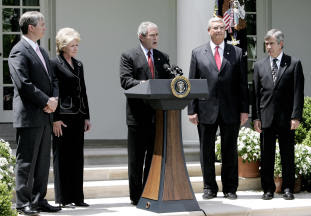
The acquisition fits snuggly with International Power’s strategy of increasing its presence in the renewables sector. Last November, the company bought Levanto, which has operations in France and Germany. After the acquisition of Trinergy is complete, International Power will have a total operational capacity of 1,013 megawatts, and an additional 117 mega watts under construction.

Trinergy has its strongest presence in Italy; its German division accounts for just 14.8% of its total current 581 megawatt capacity. 67 megawatts of additional capacity are currently under construction in Italy.

Germany and Spain are currently the largest wind energy markets in Europe, but the Italian market is expected to grow rapidly, thanks to a favorable regulatory environment.

"Both Italy and Germany are attractive markets with significant growth targets for renewable generation, supported by clear regulatory frameworks," said International Power's Chief Executive Philip Cox.

Analysts expect the company to continue expanding its presence in the industry, including possibly in Britain. The world's largest wind energy company Iberdrola , acquired Scottish Power for 17.1 billion euros (23.6 billion).
Via: Forbes
by Vidya Ram


Found this post useful? Consider subscribing to .

Blogalaxia Tags: ,

jueves, agosto 09, 2007

CLIMATE CHANGE: The nuclear energy is the solution for the present? [video]

Bruno Comby and Frédéric Marillier are both French environmentalists who believe global warming is real, dangerous, and has to be stopped. But Marillier heads the anti-nuclear campaign of Greenpeace France.

He advocates renewable energies rather than a nuclear industry that he argues is expensive, dangerous and unreliable. Bruno Comby is president of Environmentalists for Nuclear Energy.

He believes nuclear power is needed to help reduce co2 emissions and that global warming poses a bigger threat than nuclear catastrophe. Two different approaches to saving the planet now, in Agora.


Via: EuroNews

martes, julio 10, 2007

ASIA: UN says China is a 'crucial target' of Live Earth's anti-global warning message

China, by some reports the world's largest carbon dioxide emitter, is a "crucial target" of the Live Earth concerts' anti-global warning message, the United Nations representative in Beijing said Thursday.

China's business center of Shanghai is one of seven cities staging the 24-hour concerts on Saturday aimed at raising awareness of climate change.

The location is poignant since the city is the linchpin of the booming Chinese economy - blamed for spewing ever-growing levels of green house gasses into the atmosphere.

"Global warming is a very complex issue," Khalid Malik, the United Nations' resident coordinator and UNDP resident representative in China, said in a news release.

"With its rapid economic growth and soaring carbon emissions, China is regarded as a crucial target for this message," Malik said.

China has been drawing growing international attention for its chronic environmental problems, from poisoned rivers and lakes to choking air and spreading deserts.

The Netherlands Environmental Assessment Agency last month said China had overtaken the U.S. in CO2 emissions by about 7.5 percent in 2006, a finding supported by the U.N. and the U.S. Energy Information Administration.

The study said China, which relies on coal for two-thirds of its energy needs and makes 44 percent of the world's cement, produced 6.23 billion metric tons of carbon dioxide in 2006. In comparison, the U.S., which gets half its electricity from coal, produced 5.8 billion metric tons of CO2.

Chinese officials have warned of impending disasters from environmental degradation, but have rejected international pressure to adopt mandatory caps on greenhouse gas production.

The Live Earth concert series - backed by former U.S. Vice President Al Gore and founded by Kevin Wall, an Emmy-winning concert producer who produced Live 8 - is aimed at engaging a worldwide audience of 2 billion with more than 150 headliners performing in 8 cities: Hamburg, Istanbul, Johannesburg, London, New York, Rio de Janeiro, Shanghai, Sydney and Tokyo.

A band of scientists will also perform in Antarctica, stretching Live Earth across seven continents.

Performers in Shanghai will include popular Chinese singers Eason Chan, Huang Xiaoming, Anthony Wong and Joey Yung, along with British singer Sarah Brightman.

Via: WIRED

jueves, mayo 17, 2007

CLIMATE CHANGE: The cleantech investing: Cashing In On Climate Change

by Charles Morand (AltEnergyStocks)

Just as I was attending a debate this morning that touched, partly, on the desirability of implementing an emissions trading system to control greenhouse gas emissions, I received an email from Market Watch informing me that they were running a special report on climate change and cleantech investing.

The report features a very interesting collection of articles indeed. If you have about a half hour to spare, I would recommend going through all of them. The following topics are covered:

a) Global warning and the insurance industry

b) Al Gore and David Blood's investment venture

c) The weather derivatives market (as we have pointed out before, this is an area that is sure to see some healthy growth in the years ahead)

d) Carbon finance and emissions trading (the article opines that carbon trading could represent one of the biggest earners for energy desks within a few years)

e) Whether or not the current popularity of alt. energy stocks is just a fad.

f) A look at cleantech funds and ETFs from a personal finance perspective.

Nothing particularly groundbreaking for anyone who follows this space closely, but it's always interesting, in my view, to keep up with cleantech investing reports in the popular press.

One thing I've noticed - such reports are becoming increasingly sophisticated, and I think the public at large is getting a much better understanding of the opportunities and pitfalls associated with cleantech investing.

What's the implication of this? It should become a lot more difficult, in the years ahead, to find cheaply-priced cleantech gems.


martes, mayo 15, 2007

CO2: Bush urges cooperation on fuel rules

by DAVID IVANOVICH

President Bush on Monday ordered agencies within his administration to cooperate on creating a new regulation to lower fuel consumption and reduce greenhouse gas emissions.

But the White House doesn't plan to issue a final rule until the very last days of Bush's term in office.

Responding to last month's Supreme Court ruling that the Environmental Protection Agency must take action under the Clean Air Act to regulate greenhouse gas emissions from cars and trucks, Bush has directed his administration to draw up a regulation — patterned on his State of the Union address proposal — to reduce gasoline consumption by 20 percent over 10 years.

But White House might not issue final plan until his term nearly done
That plan called for dramatically expanding the use of renewable energy sources and increasing fuel mileage requirements for cars and light trucks.

"When it comes to energy and the environment, the American people expect common sense, and they expect action," Bush said in a ceremony in the White House's Rose Garden. Bush's announcement came as AAA reported Monday that the national, average price for regular unleaded gasoline had hit a record of $3.07 a gallon.

The previous record of $3.05 per gallon was set in September 2005 after Hurricane Katrina hobbled the nation's fuel-making capabilities.

In Houston, gasoline was $2.89 on average for a gallon of regular unleaded. The highest average ever in Houston was $2.97, according to AAA.

That, too, came in Katrina's wake.

The current run-up in gasoline prices has been caused by rising crude prices, higher consumer demand this year, reduced gasoline imports and downtime at refineries.

The president's announcement also followed word that German-based DaimlerChrysler would sell a controlling interest in the troubled American car manufacturer Chrysler to equity firm Cerberus Capital Management.

Bush's State of the Union address proposal called for increasing fuel-efficiency standards by 4 percent a year, starting in model year 2010 for cars and 2012 for light trucks. Administration officials calculate such a change would reduce gasoline consumption by 8.5 billion gallons in 2017, representing a 5 percent reduction in the gasoline usage expected by that year.

Bush's State of the Union proposal also called for mandating that the American driving public use 35 billion gallons of renewable and alternative fuels by 2017.

One-fifth reduction

Together, those two measures would reduce gasoline consumption by one-fifth, administration officials said.

But Bush warned crafting a rule will take many months, as administration officials evaluate issues such as safety and cost.

"This is a complicated legal and technical matter," Bush said.

"And it's going to take time to fully resolve. Yet, it is important to move forward, so I have directed members of my administration to complete ... the process by the end of 2008."

EPA Administrator Stephen Johnson said administration officials expect to have a proposed rule ready to unveil sometime this fall.

Democrats on Capitol Hill jumped on what they viewed as a stall tactic by the administration.

"In effect, the president asked his agency heads to share ideas and come up with a plan that is due three weeks before he leaves office," said Rep. Edward Markey, D-Mass., chairman of the House Select Committee on Energy Independence and Global Warming.

"Our oil dependence is too high, and the threat of global warming is too great, to allow half measures and delay to take the place of action any longer," Markey said.

Proposals to force auto- makers to roll out more fuel-efficient vehicles are gaining traction on Capitol Hill, among both Republicans and Democrats.

Last week, a Senate committee voted to increase fuel mileage requirements by 4 percent a year from 2020 to 2030.

News of the Chrysler sale "reminds us of the significant financial troubles facing America's auto industry," Sen. Pete Domenici of New Mexico, the ranking Republican on the Senate Energy and Natural Resources Committee, said Monday. "One of the reasons for these struggles is the failure of the Big Three to adapt to the growing need for vehicles that are more fuel efficient. The American consumer is now demanding vehicles that use less gasoline and emit less carbon dioxide."

Bush has also called on lawmakers to pass legislation based on his plan to reduce consumption by 20 percent.

Legislation preferred

While White House officials say they would prefer the certainty that comes from legislation, they will — in the absence of a new law — proceed with issuing new regulations.

When crafting the new rule, Johnson said, administration officials plan to follow options Justice Antonin Scalia laid out in a dissenting court opinion.

Under Scalia's formula, the EPA would have to regulate greenhouse gases if the agency determines they endanger public health.

If the agency decides the public health is not in danger or that for some other reason regulation would not be necessary, then the agency would not have to produce a new rule.

"So the Supreme Court did not direct us to regulate," Johnson said. "It identified ... three options."

Chron

Blogalaxia Tags:

jueves, mayo 10, 2007

CLIMATE CHANGE: SCIENTIST'S NEW BOOK URGES NUCLEAR POWER TO OVERCOME GLOBAL WARMING & PEAK OIL

ESTEEMED SCIENTIST'S NEW BOOK URGES NUCLEAR POWER IN BATTLE AGAINST THE CLOCK TO OVERCOME GLOBAL WARMING & PEAK OIL.

Dr. J.W. Eerkens' new book, The Nuclear Imperative, examines the various alternatives to fossil fuel from a scientific angle, and shows why nuclear power must be a crucial component in solving the impending energy crisis.

May 1, 2007 -- Dr. Jeff W. Eerkens, an internationally esteemed nuclear physicist with a PhD in Nuclear Physics from UC Berkeley and 50 years of professional experience in the field, is now available for interviews and punditry on energy topics including peak oil and global warming. He espouses nuclear energy’s potential to help solve these crucial issues. Eerkens is considered an expert in the field of nuclear energy, and has been consulted by journalists from major media outlets such as Reuters, among others. He has historical experience with international nuclear power programs such as in Iran and Russia (having consulted on and visited Chernobyl following their meltdown).

His new book, The Nuclear Imperative: A Critical Look at the Approaching Energy Crisis, published by Springer-Verlag, is now available for review, excerpting, or book roundup. Electronic excerpts are available by e-mail at your request. More information about the book is available at Springer’s website, www.springer.com .

About The Nuclear Imperative:


"A wake-up call to the importance of nuclear energy.”- Tom Marrero, Professor of Chemical Engineering, University of Missouri-Columbia.

“A very timely book which should be read by all environmentalists.” – Dick Griot, Founder & CEO, Melles Griot.

In a well-documented global wake-up call, nuclear physicist Jeff Eerkens explores remedies for the impending energy crisis, when oil and natural gas are depleted. Because the burning of coal worsens the problem of global warming, alternate energy sources must be instituted. The Nuclear Imperative demonstrates with scientific documentation that solar, wind, and biomass power, while helpful, are unfortunately economically unfeasible for supplying and sustaining the enormous quantities of electricity and heat needed for manufacturing portable synthetic fuels to replace our current use of fossil fuels. Instead, this book offers a fresh look at uranium-produced energy as the optimal solution.

Long misunderstood and irrationally feared because of antiquated beliefs by the general public, modern nuclear power generation is safer, cleaner, and essential for solving the future energy shortage.


Using a detailed, scientific approach and hard numbers to dispel common myths, The Nuclear Imperative shows that uranium fission power is available for 1500 years as a prime energy source to provide all the world's energy needs. Because it takes ten to twenty years to design, test, and build new synfuel-producing reactors and new engines powered by synfuels, action must be taken now to prevent a catastrophe thirty years from now when oil starts to run out.

MMDnewswire


Blogalaxia Tags:


lunes, abril 30, 2007

GLOBAL WARMING: Is An Alternative Energy Bubble On the Horizon?

by Abbi Adest


With Al Gore's 'An Inconvenient Truth' sweeping Hollywood and monster storms swamping coastlines, global warming is nearly impossible to ignore anymore. Add to this perennial Middle East tensions and peak oil fears and you've got the perfect recipe for a looming energy crisis. How do we save the world and still live our energy-dependent, modern lifestyles? Many corporations, venture capitalists and individual investors believe that cleantech is the answer.

The New York Times reports today about a new study on the state of the cleantech investment. The report, published by Lux Research, focuses on start-ups, IPOs and M&As. The following are key points from the report:


  • Cleantech has captured the imagination of government, corporate, and financial leaders. George Bush's 2007 State of the Union address emphasized alternative energy and action against climate change; CEOs at firms from GE (GE) to BP (BP) to Toyota (TM) tout their new revenue streams from cleantech; and bellwether venture capitalist John Doerr calls cleantech "the largest economic opportunity of the 21st century."
  • The warning signs of a bubble are appearing in the energy segment, where IPO value rose from $1.6 billion in 2005 to $4.1 billion in 2006 and venture capital raised went from $623 million to $1.5 billion, primarily on solar and biofuel deals. With 930 energy start-ups operating worldwide - 198 of which are venture-funded - energy technology looks primed for a classic private equity boom and bust.

  • At the same time, the air, water, and waste segments present hidden opportunities that are relatively starved for investment. For example, the waste segment accounted for 32% of M&A value last year but only 1% of IPO value and 4% of venture capital.


  • Total cleantech R&D funding hit $48 billion in 2006, with energy claiming the lion's share. Of this, government funding totaled $24 billion in 2006 with energy taking 57%; corporate R&D spending hit $22 billion in 2006 with energy accounting for 55%; and cleantech venture capital [VC] totaled $2.04 billion in 2006 to reach a cumulative total of $6.06 billion since 1995. VC money has been highly concentrated:

    Since 1995, the top 10% of venture-funded start-ups have received 39% of cumulative capital deployed.

  • Approximately 1,500 cleantech start-ups operate worldwide - 930 in energy, 45 in air, 90 in water, 120 in waste, and 315 in sustainability. Regionally, there are 1,020 in the U.S., 225 in Europe, 180 in Asia/Pacific, and 75 elsewhere. Of these, 356 - 23% - have received some institutional venture capital funding.
  • 30 cleantech initial public offerings [IPOs] occurred in 2006, worth $4.4 billion - up sharply from 19 deals at $1.7 billion in 2005. Energy accounted for 92% of deal value; Europe claimed 63% on a few large deals. U.S. exchanges have lost their lead in cleantech offerings; more IPOs by value have occurred on European exchanges than U.S. ones since 2005.

  • 59 cleantech merger and acquisition [M&A] deals occurred in 2006, worth $4.2 billion. In contrast to IPOs, M&A value was more evenly distributed with 43% in energy, 32% in waste, 17% in water, 8% in sustainability, and 1% in air.


  • Blogalaxia Tags:


    viernes, abril 20, 2007

    GLOBAL WARMING: USA urges India to use more clean energy

    The United States urged India on Thursday to bank more on renewable energy sources to meet its soaring demand as that would help curb rising global fossil fuel prices. US Assistant Secretary of Commerce, David Bohigian, said although India was using clean energy, policy-makers needed to do more to promote renewable energy.

    "Renewables are a national security solution and business solution," Bohigian told a business conference.

    If the US and India worked together they could change the global energy scenario from one where rising demand in Asia was putting pressure on prices to one where rising supplies would ease such pressure and help development, he said.

    US officials say working together to develop renewable energy sources and clean fossil fuel technology will also help curb greenhouse gas emissions and reduce the impacts of global warming.

    India and the United States are part of the Asia-Pacific Partnership - along with China, Japan, South Korea and Australia - which favour a voluntary approach to reducing emissions.

    The alliance - which is made of the world's biggest polluters - aims to use technology, rather than binding Kyoto-style caps, to limit greenhouse gas emissions.

    But environmentalists are sceptical about the approach, saying that the pact is voluntary and does not commit countries to the kind of emissions cuts which are required to prevent global warming.

    lunes, abril 09, 2007

    CLIMATE CHANGE: EU Says Report Underscores Need to Limit Global Warming

    A major UN report on the potentially devastating effects of global warming provides new evidence for the need to limit climate change. But the US, China and Russia stand accused of seeking to water down some sections.

    EU leaders agreed tough targets last month for reducing emissions of the gases that cause global warming, with the aim of limiting the rise in temperature to below two degrees Celsius, compared to pre-industrial levels.


    The Intergovernmental Panel on Climate Change (IPCC), the UN's top expert authority on global warming, said in its report Friday that up to 30 percent of animal and plant species will be vulnerable to extinction if global temperatures rise by 1.5-2.5 C (2.7 F to 4.5 F).


    "The report shows many of the serious impacts that would occur if global warming exceeded the EU's target of not more than two degrees Celsius above the pre-industrial level," European Environment Commissioner Stavros Dimas said.


    "The temperature today is already almost 0.8 degrees Celcius above that level, so the world needs to act fast if we are to succeed in stabilizing climate change and thereby prevent its worst impacts," he said in a statement.


    Global warming to hit Europe unevenly

    The report predicted greenhouse gases would change rainfall patterns, intensify tropical storms, accelerate the melting of Arctic ice and mountain glaciers, and amplify the risk of drought, flooding and water stress.


    Global warming will hit Europe hard but unevenly this century, cursing the south but giving a mixed blessing to the north, the report said. Mediterranean countries can brace for a higher risk of severe droughts, reduced harvests and deadly heat waves, while high-latitude nations will face flooding and severe weather balanced by longer growing seasons and expanded areas for agriculture and forestry.


    "Today's IPCC report spells out very clearly the severe effects that climate change will have on all of us," Dimas said. "This further underlines both how urgent it is to reach global agreement on reducing greenhouse gas emissions and how important it is for us all to adapt to the climate change that is already under way," he said.


    US, China try to dilute damning sections of report

    However, the report -- the UN's most toughly-worded warning on climate change as yet -- was the subject of fierce disputes in Brussels between scientists and governments. Gary Yohe, one of the report's lead authors, told Reuters that the mood at the conference in Brussels was tense.


    He said China, Russia and Saudi Arabia had raised most objections during the night to a 21-page summary which has to be approved unanimously and will guide policy in coming years on issues such as extending the U.N.'s Kyoto Protocol beyond 2012.


    The United States was also reported to be among countries seeking to water down sections about damaging impacts from a warming widely blamed on human use of fossil fuels.

    Some scientists objected, for instance, after China tried to eliminate a note saying that there was "very high confidence" that climate change was already affecting "many natural systems, on all continents and in some oceans."


    China, the second largest source of greenhouse gases after the United States and ahead of Russia, wanted no mention of the level of confidence.


    Poor countries most at risk

    The report underlined that poor tropical countries will be hit worst. Worsening water shortages in thirsty countries, malnutrition caused by desiccated fields, property damage from extreme weather events and the spread of disease by mosquitoes and other vectors will amount to a punishing bill that is beyond the ability of vulnerable countries, especially in Africa, to pay.


    "Poor people are the most vulnerable and will be the worst hit by the impacts of climate change. This becomes a global responsibility," IPCC's chairman, Rajendra Pachauri, said.


    German Development Minister Heidemarie Wieczorek-Zeul repeated the warning in Brussels as she reminded western countries that they are responsible for most of the world’s climate change. She said they must do more to help poor countries who are the least responsible yet are most affected by it.


    “Our production processes, the way we treat the environment and use our energy: these are a direct, ongoing attack on the basic foundations needed to sustain life," Wieczorek-Zeul said.


    The German minister said industrial nations must do everything possible to protect such regions by lowering emissions. The minister suggested that since 20 to 25 percent of global warming can be traced back to the destruction of tropical rainforests, countries who maintain forests should receive financial assistance.


    "I suggest, that we set up international financial mechanisms to compensate developing countries who maintain their forests because countries who do that, do something for the world climate, and they ought to be rewarded for their efforts."


    Leading conservation groups on Friday urged an immediate global response to the damning UN report.


    "The urgency of this report, presented by the world's top scientists, should be matched with an equally urgent response by governments," said Hans Verolme, director of the World Wildlife Fund's global climate change program.

    domingo, abril 08, 2007

    CANADA: Environmentalists, NDP urge government to take action

    by MELANIE PATTEN

    An international report that paints an ominous picture about the consequences of climate change has prompted strong calls for action from Canadian environmentalists and opposition parties. The document, released Friday in Brussels by the Intergovernmental Panel on Climate Change, warns of major threats to the planet and humankind.

    Federal Liberal Leader Stephane Dion said Prime Minister Stephen Harper should take immediate steps to combat climate change by endorsing a revised version of the Clean Air Act.

    Climate-change report a wake-up call

    The revamped bill, forged by opposition parties, would require Canada to meet its emission-cutting commitments under the Kyoto protocol and provide new ways of reducing smog and promote energy efficiency.

    "The Conservative government does not take its responsibilities seriously," Dion said in a statement.

    "History will judge Canada harshly if we continue on Mr. Harper’s course of undermining international efforts instead of contributing to them."

    But while the Opposition used the report to slam the Conservatives for their inaction, federal Environment Minister John Baird insisted the report justifies what the government has done to address climate change. Baird released a statement that said the report underscores the urgency for action on climate change, which he insisted his government is already doing.

    "The IPCC has presented further scientific evidence on the challenges Canada and the world is facing and will continue to face with climate change," said Baird, who wasn’t available for further comment.

    "But this government hasn’t waited to act."

    Baird noted the $4.5 billion earmarked for environment and climate-change programs in the recent budget, and said Ottawa will announce targets for mandatory reductions of greenhouse gases and air pollution in the coming weeks.

    But federal NDP Leader Jack Layton accused the Conservatives of playing political games with the bill, which some speculate could lead to an election.

    "Nothing is perfect, but it’s a heck of lot better than standing still," Layton said of the bill during a phone interview.

    "Pointing fingers back and forth between parties to say who’s best is just resulting in our standing still in the onslaught of climate change."

    Environmental activists argued developing and fulfilling a plan against climate change is no longer a political issue, but a moral one.

    "It’s not . . . a choice about public policy," said Joslyn Higginson of Greenpeace Canada.

    "Within the next 10 years if we don’t act . . . the impacts of climate change are going to be devastating and irreversible."

    The 23-page report, which was approved by an international conference on global warming, is a summary of a much larger document written and reviewed by hundreds of scientists.

    The document is the second in a series of four reports detailing the effects of global warming on the Earth and its population.

    Some scientists expressed anger Friday and argued their findings were being watered down after government negotiators changed some of the summary’s wording.

    Still, the report, which is intended as a policy guide for governments, foreshadows a bleak future. It says North America can expect more hurricanes, floods, wildfires and droughts. Heat waves will last longer and become more frequent and intense. Rising sea levels will swamp coastal areas.

    The report also says a longer growing season could boost crop yields by five to 20 per cent, but that figure would drop significantly with a rise in temperature of about 13.8 C.

    viernes, abril 06, 2007

    UNION EUROPEA: Greenpace instala un 'Arca de Noé' en Bruselas contra el cambio climático

    Este acto simbólico coincide con la reunión del Panel Intergubernamental de Cambio Climático (IPCC), que debate esta semana las conclusiones de la evaluación sobre los impactos del cambio climático

    La organización ecológica reclama, a partir de la evaluación de 2001 del IPCC, acciones para prevenir "los riesgos catastróficos a los que se enfrentan millones de personas, especies y ecosistemas a lo largo y ancho del planeta".

    Según Greenpeace, "con cada informe del IPCC desde 1990 ha aumentado la escala de riesgo". "Esta semana podremos conocer nuevas cifras y en algunos casos cuestiones nuevas, pero la foto es la misma: a mayor calentamiento, mayor es el riesgo", afirmó en Bruselas el responsable de la campaña de energía y cambio climático de Greenpeace Internacional, Stephanie Tunmore.

    En este sentido, recordó que el número de afectados por los eventos meteorológicos extremos y otros desastres naturales están "cerca de triplicarse" en las últimas dos décadas. Asimismo, los países en vías de desarrollo son "muy vulnerables" y tienen menos recursos para enfrentarse a esta nueva situación. "Si no se toman medidas, el cambio climático ocasionará unos costes humanos absolutamente inaceptables".

    "Según aumenta nuestro conocimiento y certeza acerca del cambio climático, disminuyen las excusas para quedarnos de brazos cruzados. Sabemos lo que sucede, por qué sucede y qué debemos hacer para evitarlo", denunció Tunmore.

    Por otra parte, la responsable de la campaña de cambio climático de Greenpeace en España, Raquel Montón, hizo un llamamiento para que las emisiones de gases de efecto invernadero se reduzcan "muy rápidamente para mantener el aumento medio global de la temperatura por debajo de 2 grados centígrados".

    "Las emisiones globales tendrán que reducirse a la mitad dentro de 50 años y eliminadas dentro de cien", por lo que, según Montón, "necesitamos una revolución energética para transformar radicalmente nuestro sistema energético, y esa revolución necesita que los Gobiernos dejen de hablar y actúen ya".

    Greenpeace publicó recientemente el informe 'Revolución Energética' sobre el abastecimiento mundial de energía. La organización ecologista anunció que el próximo 11 de abril va a presentar un nuevo informe "exclusivo" que evaluará cuántas instalaciones de energías renovables serían necesarias para abastecer la demanda en España.

    "Vamos a demostrar que con tecnologías renovables será posible cubrir todas nuestras necesidades energéticas y tener esperanza para frenar un cambio climático peligroso", puntualizó Montón.

    Nacional FM


    Label Cloud

    The Energy Blog