Mostrando entradas con la etiqueta European Union. Mostrar todas las entradas

lunes, febrero 25, 2008

JAPAN: Rich nations need 80 pct emission cuts

Japan, the European Union and the United States would each need to cut greenhouse gasses by more than 80 percent for the world to meet a goal of halving emissions by 2050, Japanese scientists said Thursday.
A summit last year of the Group of Eight rich nations agreed to "seriously consider" halving global emissions by 2050 in hopes of halting global warming.

To achieve such a goal, Japan -- which is already far behind in meeting its current commitments -- would need to cut emissions by 85 percent by 2050 from 1990 levels, said Norichika Kanie, assistant professor at the Tokyo Institute of Technology.

His joint research with Yasuaki Hijioka, researcher at the National Institute of Environmental Studies, found that the United States would need to cut emissions by 88 percent and the European Union by 83 percent.

He made the calculations on the premise that all countries will emit at the same level on a per capita basis by 2050.

The United States has rejected the Kyoto Protocol, the landmark treaty requiring emissions cuts through 2012, arguing that it is unfair by making no demands on fast-growing polluters in the developing world.

The Japanese study found that China would need to cut emissions by 35 percent while India, whose current per capita emissions are small, could actually increase its output by 137 percent by 2050. But even if all countries achieve the daunting tasks, the average global air temperature will rise by 2.2 to 2.6 degrees Celsius by 2050, Kanie said.

"It may seem impossible to achieve such shocking and ambitious targets, but I think it is a matter of changing lifestyle and not necessarily in an austere way," Kanie said.

"For example, I often ride my bike instead of driving a car. If the government provided a more bicycle-friendly infrastructure, people's lifestyles will change for a low-carbon society," he said.

The Kyoto Protocol, signed in 1997 in the ancient Japanese city, requires rich nations to slash emissions by an average of five percent by 2012 from 1990 levels, with a different figure set for each country. A UN conference in Bali in December agreed to seal a new pact by the end of 2009 to spell out future commitments.

The European Union has unilaterally set a goal of slashing emissions by 20 to 30 percent by 2020 from 1990 levels and has offered to go further if other major economies join the effort.

Source: Agence France Pressee
Found this post useful? Consider subscribing to
.

sábado, noviembre 24, 2007

CO2: Proyecto DECARBit investigará tecnologías de captura de carbono más económicas

Una nueva línea de investigación, financiada con fondos comunitarios, sobre tecnologías de captura de carbono de precombustión para centrales eléctricas de gas y carbón está a punto de ponerse en marcha. La coordinación del proyecto DECARBit, de cuatro años de duración, correrá a cargo de la organización independiente noruega de investigación SINTEF. Financiado con cargo al Séptimo Programa Marco, el proyecto contará con la participación de catorce socios provenientes de ocho países.


La tecnología empleada actualmente en la captura de CO2 se basa principalmente en la acción de sustancias químicas capaces de depurar los gases de combustión y separar el CO2 de otros gases en el caudal de escape; es lo que se da en llamar la captura poscombustión. El método resulta más caro y más complicado de dominar que la captura en precombustión, consistente en eliminar el carbono presente en los combustibles a base de carbón y gas natural antes de su llegada a la central eléctrica.

La descarbonización del combustible básico -carbón, gas natural o biomasa- se realiza mediante transformación en gas de síntesis, rico en hidrógeno y monóxido de carbono. Este, mediante reacción de desplazamiento de gas de agua (WGS), se convierte luego en dióxido de carbono. Tras lo cual, el CO2 está listo para su captura y almacenamiento, y el combustible descarbonizado y rico en hidrógeno, para su transporte hasta la central energética.

SINTEF, futuro coordinador del proyecto DECARBit, forma parte de la sección noruega de la Red Europea de Centros de Enlace para la Innovación. Proporciona a las empresas y los centros de investigación asistencia en el campo de la transferencia tecnológica, los acuerdos de licencia, los derechos de propiedad intelectual y la localización de fuentes de financiación de la innovación. Participa en diversos proyectos comunitarios en multitud de campos de investigación, entre ellos cinco iniciativas orientadas a la captura de CO2.

Noruega, como país petrolífero, lleva tiempo liderando el desarrollo de tecnologías de captura y almacenamiento de carbono. En octubre de 1996, se ponía en funcionamiento en el campo de gas Sleipner Vest, en el mar del Norte, la primera central de captura de CO2 en el mundo. El operador es StatoilHydro, la gran petrolera y empresa del sector del gas en Noruega.

Desde SINTEF indican que el amplio apoyo a la investigación prestado por la UE, Noruega se lo debe a esta experiencia y a la estrecha colaboración nacional entre la propia SINTEF, StatoilHydro y la Universidad de Ciencia y Tecnología de Noruega (NTNU).

CO2: Proyecto DECARBit investigará tecnologías de captura de carbono más económicas«Participar en estos proyectos es importante para los institutos de investigación y para el país en general; como prueba de ello, las muchas redes a las que se nos facilita el acceso», coinciden Nils A. Røkke, Director de Tecnología de gases en SINTEF, y el Profesor Olav Bolland, de la NTNU.

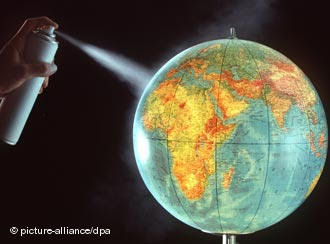
Sin embargo, el Gobierno noruego anunció hace poco que congelaría las ayudas estatales a la investigación en captura de CO2. «Nos preocupa que el parón de la financiación pública aquí en casa pueda impedir la necesaria puesta al día de los recursos de laboratorio, con lo que supone para Noruega de pérdida de competitividad en Europa», comentan el señor Røkke y el Profesor Bolland.

La UE y algunos gobiernos nacionales han venido invirtiendo recursos significativos en el estudio de tecnologías de captura y almacenamiento de carbono, mientras otros grupos interesados se han lanzado a utilizarlas como medio para luchar contra el cambio climático. Sin embargo, algunas voces críticas advierten acerca de los posibles riesgos del almacenamiento de carbono. De hecho, aún se desconocen con certeza los efectos de la captura de carbono en sistemas marinos y el almacenamiento en pleno océano, acuíferos abiertos y lagos o en el fondo marino, por ejemplo.

Via: CORDIS
Para obtener más información, consulte:
http://www.sintef.no/

Tags: , , , , ,


Found this post useful? Consider subscribing to

.


domingo, septiembre 23, 2007

CLIMATE CHANGE: interview with Thomas Bunge, Recalling the World's First Steps Toward Climate Protection

The passage of the Montreal ozone protocol 20 years ago was a milestone in international climate protection. DW-WORLD.DE spoke to Thomas Bunge, a member of the German delegation, who was part of the historic event.

Thomas Bunge represented Germany's Federal Environment Agency in drawing up the "Montreal Protocol on Substances that Deplete the Ozone Layer" in September 1987. The lawyer is currently responsible for Environment and Spatial Planning at the agency.

DW-WORLD.DE: Why was the 1987 Montreal protocol so significant?

Thomas Bunge: That was the beginning of international regulations to protect the earth's atmosphere. Until then, there was only regulation of long-range, transnational air pollution. People tried for the first time to resolve a worldwide problem through international law, although in retrospect, the regulations then were certainly inadequate.

Can you briefly explain why they were inadequate?

The regulations agreed in 1987 were supposed to reduce the production and use of substances that damaged the ozone layer by a maximum of only up to 50 percent. But people very quickly noticed that that wasn't enough to effectively protect the ozone layer. In 1990, that is, a year after the regulations came into effect, the stipulations had already been tightened. The decision was made to entirely discontinue production and use by the year 2000. In 1994, the deadlines were again shortened. Thus people wanted, and still want, to relatively quickly achieve a full discontinuation of production, and also of use, of the substances. It's true that developing countries currently the still have the right to produce and use the substances in small amounts. But relatively soon the use and the production will be discontinued worldwide.

Can you describe how things came about? How is such a compromise reached?

As is normally the case in the realm of international law, there are specific working groups for the individual application areas one aims to regulate. The building blocks for such an international treaty are worked out in the groups. The individual building blocks must then be voted on and approved in the plenum. That is, as in all cases, a compromise between the interests that the individual states represent at these conferences, of course. The whole thing was fleshed out with science and the scientific results available up until the signing in 1987 were included. The interests of the individual states and the scientific results were then put in relation. That led to a compromise with which one was at the time not particularly happy.

Can you provide an example of a practical problem that had to be overcome? Did particular countries block movement?

It was several blocks of states. The European Union comprised its own negotiation block. Of course, that was significantly fewer states than today. There was a so-called "Toronto Group" of states. They represented the Scandinavian states, Canada, Australia and Switzerland. This group with Australia and New Zealand, which would have been affected the soonest by the consequences of the hole in the ozone layer -- and then was affected -- wanted to pass very wide-reaching regulations. On the other side, there was an array of industrial countries that produced these substances. They were naturally interested in continuing production or being able to produce appropriate substitutes.

How was the atmosphere among the conference participants on Sept. 16, 1987, when the protocol was passed?

People were pleased that a compromise had been reached. But we had already seen that the rules weren't sufficient for the next 20, 30, 40 years. We recognized that the progressive states also had had to swallow some bitter pills. But in retrospect, it was a success, of course, to very quickly bring very many countries on board on trade regulations that envisaged limitations on trade with countries that weren't party to the treaty. In this way, one had a model for the negotiations on climate regulations that started relatively soon thereafter.


Found this post useful? Consider subscribing to

.


CLIMATE CHANGE: European Union to Help Poor Nations Fight Global Warming

The European Commission is setting up a Global Climate Change Alliance (GCCA) with developing countries, which foresees integrating the tackling of climate change into poverty reduction strategies.

The European Commission this week announced the creation of a fund to help developing nations battle climate change, putting in 50 million euros ($69 million) itself to kick it off.

Louis Michel, EU Commissioner for Development and Humanitarian Aid, proposed the global alliance to help developing nations deal with and adapt to the effects of climate change.

"We need to maintain structured dialogue on tackling the effects of climate change," he said. "And we have to prepare developing nations for future natural disasters."

With global warming affecting many sectors, the EU is keen to integrate "climate proofing" into poverty reduction efforts in order to ensure sustainability.

Increasingly frequent, increasingly deadly

According to the Center for Research on the Epidemiology of Disasters (CRED), the number of natural disasters recorded since 1900 is on the rise, as is the number of people affected by such disasters since 1975.

From tsunamis in Asia, hurricanes in central and North America to earthquakes in Pakistan, floods in India and famine in Africa, natural disasters have become increasingly frequent and increasingly deadly in recent years. Seven of the 10 worst disasters of the last 20 years occurred between 2000 and 2006.

 The European Commission is setting up a Global Climate Change Alliance (GCCA) with developing countries, which foresees integrating the tackling of climate change into poverty reduction strategies.  The European Commission this week announced the creation of a fund to help developing nations battle climate change, putting in 50 million euros ($69 million) itself to kick it off.  Louis Michel, EU Commissioner for Development and Humanitarian Aid, proposed the global alliance to help developing nations deal with and adapt to the effects of climate change.
Moreover, the EU Commission is concerned that the effects of global warming are felt first and foremost by the poor and vulnerable in developing countries. Responsible for just a small percentage of global pollution themselves, they nonetheless feel the immediate effects of ecological degradation caused by industrialized and emerging nations.

While most affected by global warming, these countries also have the least capacity to deal with climate change.

"Developing countries will be the hardest hit by the effects of climate change and therefore need our help to mitigate climate change and to adapt to the changes already occurring," said this week's Commission statement.

Financing a high-tech battle
The Global Climate Chance Alliance seeks to cut emissions from deforestation -- a major contributor to rising greenhouse gas levels -- and help developing countries take advantage of the global carbon market.


The commission will also fund dams and intelligent irrigation systems in order to minimize damage caused by flooding. Early warning systems for hurricanes and disaster protection program will also get financing.

Brussels expects the battle against global warming to be a high-tech one.

"New technology is only one way of developing towards a sustainable society without hampering development and quality of life," said the commission statement.

With 50 million euros already earmarked for the launch of the alliance, Michel said it could handle up to 300 million euros between 2008 and 2010.

"It's just a start," he said. "More money is clearly needed. Other resources are necessary to respond to the scale of the needs," he added, calling on EU member states to boosts the funds.

Via|DW News
,,,,

Found this post useful? Consider subscribing to

.


sábado, septiembre 08, 2007

DEUTSCHLAND: Germans want to invest 100mln Euro in biofuel factory

That smell coming from that super-modern highclass luxury car, say an Audi A8, BMW7 or Mercedes- S class won’t be just fine Corinthian leather any more, but something a tad more toxic, if fuel-efficient: something like fried potatoes. That’s because investments in biofuels are picking up, including German interest in a 100 million Euro plant, probably near the sea capital of Varna, which would make Bulgaria a key player in the burgeoning drive to produce biofuels for cars, initially for luxury cars whose buyers can afford the changes needed to modify the vehicles.

It has become clear that the biggest producer of such fuels in Europe, the German concern Verbio AG (Verbio Vereinigte BioEnergie AG) is checking the opportunities to invest in construction of a factory for biofuels in Bulgaria. The executive director of Verbio AG Klaus Zauter discussed the investment plans of the company during a meeting with the Minister of Economy and Energy Petar Dimitrov. Verbio AG is looking for proper terrain to build the concern, and reportedly prefers a port city.

The factory will produce biodiesel and bioethanol both at the same time. Dimitrov said he thinks a likely site is Varna. Most probably the company will apply as a first-class investor. The local partner of the concern is Euroethyl JSC which is the first producer of bioethanol in the country and has a plant near Alfatar, the Silistra region. Euroethyl JSC is planning to widen this factory. The project is scheduled to be finished at the beginning of 2008 and, with it, the capacity for producing bioethanol will increase four times, said the company’s Executive Director, Radoslav Shunk, cited by Bulgarian National Radio.

The capacity of Euroethyl JSC now is 10,000 000, litres, and it’s aiming to achieve 40,000,000 litres. Dimitrov is well acquainted with the perspectives for rapid growth of the biofuels market. As a former chairman of a committee of ways and means in the parliament, he was one of the defenders of the stimulation of this business in Bulgaria, as experts in the branch are reminding. Dimitrov was an active participant and has had a great contribution to the establishment of zero rating for biofuels by a change in the Tax Stores and Excise Duties Act, said officials from Euroethyl JSC. Verbio has plants for biodiesel and bioethanol in Germany with a total production capacity of more than 700,000 tonnes per year, or 2,100,000 litres per day. Some 400,000 tonnes is biodiesel and 300,000 tonnes is bioethanol.

The company is working also in the field of the reviving energy sources. The concern owns a 120-megawatt wind power plant in Germany. The whole business is united in Verbio Group, which has more than 1000 employees and revenues of more than one billion Euro. Shares of the concern are traded at the stock exchange in Frankfurt. Verbio is not the first foreign producer declaring intentions to invest in construction of plants in Bulgaria. Back in February the Bulgarian News Agency reported that businessmen brothers Tomas and Richard Pambald from Sweden are intending to invest 70,000,000 Euro for construction of a biofuel plant near Pleven. They presented their project during a meeting with the chief of the region Cvetko Cvetkov.

The Swedish investors are planning production capacity of 150,000 cubic metres of bioethanol per month. According to the Agriculture and Woods service in the region of Pleven, more than 400,000 tonnes of biomass, proper for processing in fuel, is expected to be extracted. The larger usage of biofuels in the future is not only an act of good will. The Directive of EU 30 from 2003 obliges EU countries to increase the use of ecological fuels sharply, instead of the oil. In this respect, biodiesel will replace a bigger part of oil fuels. Biodiesel in Europe today is an industry of more than USD 500 million, and the consulting agency Frost & Sullivan predicted growth up to USD 2.4 billion with 4.5 million tonnes in sales per year until 2007. The European Union will need millions of tonnes of imported biofuels to fulfill its ecological plans, the Financial Times reported. This is demanded by an act, requiring standard fuels to be mixed with 10 percent ethanol.

According to the ecological requirements, after 2009 European gas stations should start offering two new types of petrol – E5 with five percent ethanol and E10 mixed with 10 percent of the alternative fuel. The biodiesel market is growing all over the world. In Germany this fuel is offered at a lower price than petrol diesel at more than 2000 gas stations. At the moment, Bulgaria has accepted the guideline for replacement of 5.75 percent of the petrol and diesel with reviving fuels. For now only a few gas stations are mixing the fuels and only Tempo petrol is offering pure biodiesel. With the exceptionally favourable conditions for raising rape, sunflower and other oil-bearing cultures it is economically profitable to use car fuels, produced by vegetable or animal oils. This process has been growing fast in the last few years.

Dozens of thousand of tonnes of biodiesel per year are used for transportation and other purposes in the country. In contemporary ecological plant-growing the protection of the soils from contamination is significant in order to answer the requirements for organic farming. The agricultural transport and machinery in organic farming will be required to use 100 percent organic fuels (biodiesel, ethanol, biopetroleum), which are not contaminating the soil, the ground waters and the air in order to guarantee ecologically pure production.

That smell coming from that super-modern highclass luxury car, say an Audi A8, BMW7 or Mercedes- S class won’t be just fine Corinthian leather any more, but something a tad more toxic, if fuel-efficient: something like fried potatoes. That’s because investments in biofuels are picking up, including German interest in a 100 million Euro plant, probably near the sea capital of Varna, which would make Bulgaria a key player in the burgeoning drive to produce biofuels for cars, initially for luxury cars whose buyers can afford the changes needed to modify the vehicles.  It has become clear that the biggest producer of such fuels in Europe, the German concern Verbio AG (Verbio Vereinigte BioEnergie AG) is checking the opportunities to invest in construction of a factory for biofuels in Bulgaria. The executive director of Verbio AG Klaus Zauter discussed the investment plans of the company during a meeting with the Minister of Economy and Energy Petar Dimitrov. Verbio AG is looking for proper terrain to build the concern, and reportedly prefers a port city.  The factory will produce biodiesel and bioethanol both at the same time. Dimitrov said he thinks a likely site is Varna. Most probably the company will apply as a first-class investor. The local partner of the concern is Euroethyl JSC which is the first producer of bioethanol in the country and has a plant near Alfatar, the Silistra region. Euroethyl JSC is planning to widen this factory. The project is scheduled to be finished at the beginning of 2008 and, with it, the capacity for producing bioethanol will increase four times, said the company’s Executive Director, Radoslav Shunk, cited by Bulgarian National Radio.  The capacity of Euroethyl JSC now is 10,000 000, litres, and it’s aiming to achieve 40,000,000 litres. Dimitrov is well acquainted with the perspectives for rapid growth of the biofuels market. As a former chairman of a committee of ways and means in the parliament, he was one of the defenders of the stimulation of this business in Bulgaria, as experts in the branch are reminding. Dimitrov was an active participant and has had a great contribution to the establishment of zero rating for biofuels by a change in the Tax Stores and Excise Duties Act, said officials from Euroethyl JSC. Verbio has plants for biodiesel and bioethanol in Germany with a total production capacity of more than 700,000 tonnes per year, or 2,100,000 litres per day. Some 400,000 tonnes is biodiesel and 300,000 tonnes is bioethanol.  The company is working also in the field of the reviving energy sources. The concern owns a 120-megawatt wind power plant in Germany. The whole business is united in Verbio Group, which has more than 1000 employees and revenues of more than one billion Euro. Shares of the concern are traded at the stock exchange in Frankfurt. Verbio is not the first foreign producer declaring intentions to invest in construction of plants in Bulgaria. Back in February the Bulgarian News Agency reported that businessmen brothers Tomas and Richard Pambald from Sweden are intending to invest 70,000,000 Euro for construction of a biofuel plant near Pleven. They presented their project during a meeting with the chief of the region Cvetko Cvetkov.  The Swedish investors are planning production capacity of 150,000 cubic metres of bioethanol per month. According to the Agriculture and Woods service in the region of Pleven, more than 400,000 tonnes of biomass, proper for processing in fuel, is expected to be extracted. The larger usage of biofuels in the future is not only an act of good will. The Directive of EU 30 from 2003 obliges EU countries to increase the use of ecological fuels sharply, instead of the oil. In this respect, biodiesel will replace a bigger part of oil fuels. Biodiesel in Europe today is an industry of more than USD 500 million, and the consulting agency Frost & Sullivan predicted growth up to USD 2.4 billion with 4.5 million tonnes in sales per year until 2007. The European Union will need millions of tonnes of imported biofuels to fulfill its ecological plans, the Financial Times reported. This is demanded by an act, requiring standard fuels to be mixed with 10 percent ethanol.  According to the ecological requirements, after 2009 European gas stations should start offering two new types of petrol – E5 with five percent ethanol and E10 mixed with 10 percent of the alternative fuel. The biodiesel market is growing all over the world. In Germany this fuel is offered at a lower price than petrol diesel at more than 2000 gas stations. At the moment, Bulgaria has accepted the guideline for replacement of 5.75 percent of the petrol and diesel with reviving fuels. For now only a few gas stations are mixing the fuels and only Tempo petrol is offering pure biodiesel. With the exceptionally favourable conditions for raising rape, sunflower and other oil-bearing cultures it is economically profitable to use car fuels, produced by vegetable or animal oils. This process has been growing fast in the last few years.  Dozens of thousand of tonnes of biodiesel per year are used for transportation and other purposes in the country. In contemporary ecological plant-growing the protection of the soils from contamination is significant in order to answer the requirements for organic farming. The agricultural transport and machinery in organic farming will be required to use 100 percent organic fuels (biodiesel, ethanol, biopetroleum), which are not contaminating the soil, the ground waters and the air in order to guarantee ecologically pure production.

Via: New Europe News
,,,,,,,,,,,,,


Found this post useful? Consider subscribing to

.

miércoles, septiembre 05, 2007

EUROPE: Expertos europeos estudian en el Centro de Energías Renovables la viabilidad de las pilas de hidrógeno

Expertos europeos estudiarán esta semana en el Centro Nacional de Energías Renovables (CENER) la viabilidad técnica y económica de la implantación de un mercado de pilas de hidrógeno para uso residencial, informó la entidad en un comunicado.

A las jornadas asisten una quincena de especialistas en la investigación aplicada de este vector energético como combustible alternativo a los combustibles fósiles.

El objetivo, explicó el CENER, es estudiar la viabilidad para la implantación de un mercado de pilas de combustible en diferentes regiones europeas de Alemania, Dinamarca, España, Holanda, Islandia, Polonia y Portugal capaz de satisfacer, total o parcialmente, las necesidades energéticas del sector residencial.

En España la investigación se lleva a cabo en Navarra, en la sede del CENER, donde se analiza la existencia de un mercado potencial en los ámbitos rural y urbano para la implantación de 300 pilas de combustible de 1kW, con las que es posible cubrir el 90% de la demanda eléctrica de una vivienda de 90 metros cuadrados.

El grupo estudiará además el modo más idóneo de obtener, en cada región, el hidrógeno que alimente estas pilas a través de energías renovables, que en el caso de la Comunidad Foral sería a partir de energía eólica mediante electrolisis del agua.

El tamaño de las pilas puede ser comparable con el de la CPU de un ordenador y se pueden colocar en un balcón o una zona semicubierta, como las empleadas actualmente para el calentador de gas, aunque también es posible albergarlas dentro de casa.

Estas pilas, precisó el CENER, no necesitan una instalación especial, su coste ronda los 6.000 euros/kW y su fabricación, hoy por hoy, es prácticamente artesanal.

Según los expertos, la producción de electricidad y calor en pequeñas unidades descentralizadas es, junto con la propulsión de vehículos y los portátiles (ordenadores y móviles) una de las principales aplicaciones de las pilas de combustible, cuya eficiencia energética supera entre un 30 y un 50% la de los sistemas convencionales y además no resultan contaminantes y son silenciosas. Por ello el CENER indicó que el hidrógeno se perfila, en un escenario energético no muy lejano, como el combustible alternativo a los derivados de los combustibles fósiles.

A respecto señaló que su uso contribuirá a asegurar el suministro necesario de energía permitiendo diversificar las fuentes y reducir las emisiones relacionadas con el cambio climático.

Según los expertos, entre 2015 y 2019 se desarrollará una red de distribución y de la infraestructura necesaria que permita el suministro de hidrógeno al por menor a usuarios finales particulares, y entre 2020 y 2040 se producirá el desarrollo de estaciones de servicio de hidrógeno semejantes a las actuales gasolineras.

Via: EFE
| ,,,,,,,,,,,,

Found this post useful? Consider subscribing to
.


viernes, agosto 10, 2007

UNITED KINGDOM: International Power In With The Wind

British energy supplier International Power has taken a leap into the wind power super league–a sector that has thrived in Europe, thanks to concerns about global warming, the supply of oil, and the continent’s increasing dependence on Russia for its gas supplies.

International Power agreed to buy Trinergy, which has wind farm projects in Italy and Germany for 868 million euros ($1.2 billion) over the weekend, making it one of the world’s largest producers of wind energy. The news was welcomed by the markets, on an otherwise gloomy day. Its shares topped the gainers in early afternoon trading in London, rising 14.50 pence (30 cents), or 3.4%, to £4.41 ($8.96).

Trinergy is being acquired from private investors linked to the Matrix Group and CJS Capital Partners, and is being funded through the acquisition of £202 million ($410.2 million) in debt, and the company’s own liquid resources.

The market thumbs up reflects confidence in International Power’s decision to firm up its foothold in Europe’s wind power sector, which has been growing rapidly. Last year the wind power capacity in the European Union increased by 19.0%, and is expected to continue to grow, boosted by a new European Commission commitment. In March an agreement by European Union governments committed their countries to binding targets to ensure that 20.0% of all energy will come from renewable sources by 2020.

The acquisition fits snuggly with International Power’s strategy of increasing its presence in the renewables sector. Last November, the company bought Levanto, which has operations in France and Germany. After the acquisition of Trinergy is complete, International Power will have a total operational capacity of 1,013 megawatts, and an additional 117 mega watts under construction.

Trinergy has its strongest presence in Italy; its German division accounts for just 14.8% of its total current 581 megawatt capacity. 67 megawatts of additional capacity are currently under construction in Italy.

Germany and Spain are currently the largest wind energy markets in Europe, but the Italian market is expected to grow rapidly, thanks to a favorable regulatory environment.

"Both Italy and Germany are attractive markets with significant growth targets for renewable generation, supported by clear regulatory frameworks," said International Power's Chief Executive Philip Cox.

Analysts expect the company to continue expanding its presence in the industry, including possibly in Britain. The world's largest wind energy company Iberdrola , acquired Scottish Power for 17.1 billion euros (23.6 billion).
Via: Forbes
by Vidya Ram


Found this post useful? Consider subscribing to .

Blogalaxia Tags: ,

jueves, julio 05, 2007

EUROPE: Biofuels to buy farm prices in next decade: OECD/FAO

The rapid growth of the world's biofuel industry is likely to keep farm commodity prices at high levels in the next decade as it will boost demand for grains, oilseeds, and sugar, a major study said on Wednesday.

The study, co-written by the Organization for Economic Cooperation and Development (OECD) and the United Nations' Food and Agriculture Organization (FAO), said biofuels would have a major impact on the agriculture sector between 2007 and 2016.

"Bioenergies have become a key factor in the functioning of agriculture markets," Loek Boonekamp, a senior OECD official, told reporters after the release of the study.

"In the medium term we believe that they could lead to prices on international markets rising quite considerably, at higher levels than what we had predicted in former outlooks and above the average of the last 10 years," he added.

Boonekamp said that farm prices, mainly grains, would likely rise by 20 to 50 percent over the next decade.

He added that although the long-term development of the biofuel sector remained unclear, farm prices would remain high in the coming years even without a sharp rise in biofuel demand because of the recent drop in output in many parts of the world.

Biofuels have become a major issue on global commodities markets over the last years as they are increasingly put forward as politically, environmentally, and economically friendly alternatives to fossil fuels.

Made of grain, oilseeds, and sugar, the "green" fuels are expected to lower dependence on fossil fuels, cut carbon dioxide emissions -- one of the main causes for climate change -- and raise farm revenues.

The extra biofuel demand, combined with low stocks worldwide due to poor harvests last year and fears of possible damage to the upcoming crops have sent global grain and oilseed prices rocketing to historic highs over the last months. ------------- U.S., EU demand to soar

In its 2007-2016 agriculture outlook, the OECD-FAO did not expect the rise to reverse soon.

"In a context of generally lower global stocks in recent years, this additional demand (to make biofuels) is expected to underpin prices and lead to price levels for field crops that are on average higher than in past projections," the study said.

It added that grain prices were expected to stay higher than in the past 10 years, which would also have an indirect effect on prices for livestock products due to higher feed stocks.

Ethanol production in the United States, predominantly based on domestic maize (corn), was expected to grow by almost 50 percent in 2007 and, as growth rates decline thereafter, to double by 2016, the study said.

“In consequence, maize use for fuel production, which has doubled from 2003, would increase from some 55 million tons, or one-fifth of maize production in 2006, to 110 million tons or 32 percent at the end of the projection period,” it said.

In the European Union, where biofuel production so far is largely dominated by rapeseed-based biodiesel, ethanol output was expected to rise in the next decade, adding pressure on the wheat and maize markets. "Use of wheat in particular is set to increase twelvefold and to reach some 18 million tons by 2016. Growth in the use of oilseeds (largely rapeseed) and maize is less dramatic, but would still reach 21 million tons and 5.2 million by 2016."

However, the study predicted that the share of biofuels in total transport fuel consumption would not exceed 3.3 percent in energy terms, well below the 5.75 percent target fixed by the European Commission.

The report put Brazil as one of the fastest growing biofuel producer and said its ethanol output would reach some 44 billion liters in the next decade, or 145 percent more than in 2006.

The OECD-FAO also said Chinese ethanol production, mainly made from maize, at 3.8 billion liters by 2016, up from 1.5 billion in 2006. Maize use for fuel ethanol should therefore exceed nine million tons by 2016, from 3.5 million last year.


Blogalaxia Tags:


Label Cloud

The Energy Blog